Programming Cat Electronic Truck Engine Page 25
Programming
Page 24
Vehicle Speed Parameters
Vehicle Speed Limit ( VSL)
OEM
Description:
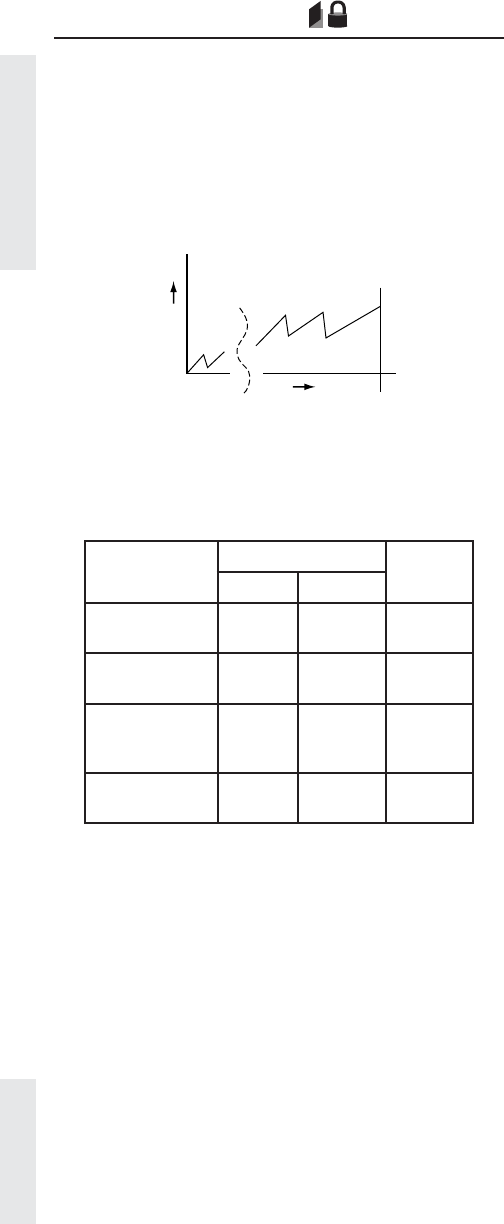
Vehicle speed limiting sets the maximum speed of the
truck. Vehicle Speed Limiting cuts off the fuel to the
injectors when the truck exceeds the programmed
speed. With the release of NOV95 Personality Module
Software, VSL can be exceeded using cruise control
if the High Cruise Control (HCC) Set Limit parameter
is programmed higher than the Vehicle Speed Limit
parameter ( ).
MPH
R
P
M
VSL
Available:
All electronically controlled on-highway engines
covered in this handbook. The ability to program HCC Set
Limit above VSL is available on heavy duty engines only.
Range:
Engine
Range
Cat
Default
Minimum Maximum
3126E, C7, C9 GM
30 MPH
(48 km/h)
75 MPH
(121 km/h)
75 MPH
(121 km/h)
3126E, C7, C9
Other
30 MPH
(48 km/h)
127 MPH
(204 km/h)
127 MPH
(204 km/h)
C-10, C-12, C-15,
C-16, C11, C13,
C15
30 MPH
(48 km/h)
127 MPH
(204 km/h)
127 MPH
(204 km/h)
2007 C7, C9, C13,
C15
30 MPH
(48 km/h)
127 MPH
(204 km/h)
75 MPH
(121 km/h)
Advantages:
Using the VSL feature allows you to “gear fast - run
slow” to optimize the balance between fuel economy
and performance or simply specify for the best fuel
economy. Setting VSL allows the truck operator to
consistently operate the engine and truck at fuel
effi cient and safe vehicle speeds. Without VSL, most
trucks can be capable of very high vehicle speeds, due
to GFRS/GFRSS spec’ing methods.
Disadvantages:
VSL can be a hard limit that allows no fuel until the
vehicle slows to a speed below the programmed limit.
This makes the common practice of “running at hills”
very diffi cult. Soft VSL ( ) may alleviate this
problem if the driver expects to operate at or above VSL
on downhill runs.
See page 31
See page 31
Contents Summary of Programming Cat Electronic Truck Engine
- Page 1Programming Cat® Electronic Truck Engine February 2009
- Page 2Table of Contents Introduction ....................................................................................... 5 What’s New ........................................................................................... 6 Maximizing Fuel Economy ..................................................
- Page 3Engine Retarder Options ............................................................... 73 Exhaust Brake/Warm Up Enable ..................................................... 74 Engine/Gear Parameters ............................................................... 75 Lower Gears Engine RPM Limit ....
- Page 4Trip Parameters............................................................................. 136 Fuel Correction Factor .................................................................... 137 Change Fuel Correction Factor ........................................... 139 PM1 Reset ...................
- Page 5Output Selection ........................................................................... 199 Fast Idle Enabled Lamp ................................................................... 200 Wait to Start Lamp ........................................................................... 201 Change Oi
- Page 6Introduction By the early 1980’s, it had become evident that new engine technologies would have to be brought to bear if Caterpillar, or any other diesel engine manufacturer, was to prosper in the rapidly evolving market environment. Introduction A combination of increased government regulation, pro
- Page 7What’s New Much has changed with Caterpillar’s on-highway engine technology since the last revision of this book in May 2005. This book picks up where the May 2005 revision left off, covering all EPA’07 emissions compliance Introduction changes for on-highway engines. ✔ All of the electronic paramet
- Page 8Understanding the Electronic Controls This booklet is to aid you in choosing appropriate programmable values. Some features fall into a “non-programmable” or “programmable only by your authorized Cat dealer” category. While you may not Introduction need to be concerned about programming these parame
- Page 9In short, the programmable features fall into two basic categories: Factory specified parameters and features Introduction which include both; 1 – Caterpillar Standard Features 2 –Truck Manufacturers’ (OEM) Standard Features Customer specified parameters and specifica- tions which include both; M OE
- Page 10Factory Specified Parameters and Features Each new engine will come with several features set at factory default settings. Some of these, like the oil Introduction sump capacity, are set at the engine factory. Others, like the tachometer calibration, are set by the truck manufacturer. All of these d
- Page 11Customer Programmable Parameters and Specifications Determining Parameters and Specifications On the following pages you will see a explanation of each electronic parameter. Along with the explanations Introduction are helpful recommendations and in some cases, split chart examples to help in specif
- Page 12Feature Comparison by Model C-10 3126E EPA 2004 EPA 2004 EPA 2007 EPA 2007 C-12 Feature C-15 C-16 Introduction Vehicle ID z z z z z z Vehicle Speed Calibration z z z z z z Vehicle Speed Limit z z z z z z VSL Protection z z z z z z Tachometer Calibration z z z z z z Soft Vehicle Speed Limit z z z z z
- Page 13Feature Comparison by Model C-10 3126E EPA 2004 EPA 2004 EPA 2007 EPA 2007 C-12 Feature C-15 C-16 Introduction Lower Gears Turn Off Speed z z z z z z Intermediate Gears Engine rpm Limit z z z z z z Intermediate Gears Turn Off Speed z z z z z z Gear Down Protection rpm Limit z z z z z z Gear Down Pro
- Page 14Feature Comparison by Model C-10 3126E EPA 2004 EPA 2004 EPA 2007 EPA 2007 C-12 Feature C-15 C-16 Introduction Engine Retarder Delay z z z z Engine Monitoring Mode z z z z z z Engine Monitoring Lamps z z z z Warning Lamp Config (Red Stop Lamp) z z Coolant Level Sensor z z z z z z Low Coolant Level L
- Page 15Data Book and Optional Parameters M OE OEM Data Book Page Vehicle Speed Calibration .......................................................................20 Vehicle Speed Calibration (J1939 Trans) ..............................................22 Vehicle Speed Calibration (J1939 ABS) ...............
- Page 16Optional Page Vehicle ID ...................................................................................................18 Soft Vehicle Speed Limit ..........................................................................31 Idle/PTO Bump RPM .....................................................
- Page 17Informational Parameters Outlined below are parameters as programmed from the Caterpillar Factory. This list serves to briefly explain these parameters that appear when connecting the Introduction Caterpillar service tool to the truck engine. Selected Engine Rating • Rating Number - Specific rating
- Page 18ECM Identification Parameters Factory Databook Optional ECM Identification Parameters M OE • Vehicle ID ............................... ✔ Page 17
- Page 19Vehicle ID Description: ECM Identification Parameters The Vehicle ID parameter allows the truck or fleet owner to electronically identify the vehicle with a unique set of characters. The Vehicle ID can be up to 17 characters long. The Vehicle ID is required when using the optional Fleet Information
- Page 20Vehicle Speed Parameters Factory Databook Optional Vehicle Speed Parameters M OE • Vehicle Speed Calibration ... ✔ • Vehicle Speed Calibration (J1939 Trans) .......................... ✔ • Vehicle Speed Calibration (J1939 ABS) ............................ ✔ • Vehicle Speed Limit (VSL).... ✔ • VSL Pro
- Page 21Vehicle Speed Calibration OE M Description: Vehicle Speed Parameters The value (Pulses per Mile, PPM) of this parameter is used by the ECM to convert the vehicle speed signal into miles per hour (or kilometers per hour). The value is calculated using tire revolutions per mile, rear axle ratio and th
- Page 22Recommendations: ✔ Let the OEM calculate and program Vehicle Speed Calibration parameter based on the truck specs. Vehicle Speed Parameters ✔ Recalculate and program the Vehicle Speed Calibration parameter if any changes are made to the driveline components, such as a different rear axle ratio or a
- Page 23Vehicle Speed Calibration (J1939-Trans) OE M Description: Vehicle Speed Parameters If a value is programmed into the Vehicle Speed Calibration (J1939 - Trans) parameter the ECM will use the data that is received from the transmission controller over the J1939 data link to calculate vehicle speed. Th
- Page 24Vehicle Speed Calibration (J1939-ABS) OE M Description: Vehicle Speed Parameters If a value is programmed into the Vehicle Speed Calibration (J1939 - ABS) paramter the ECM will use the data that is received from the ABS controller over the J1939 data link to calculate vehicle speed. The Vehicle Spee
- Page 25Vehicle Speed Limit (VSL) OE M Description: Vehicle speed limiting sets the maximum speed of the Vehicle Speed Parameters truck. Vehicle Speed Limiting cuts off the fuel to the injectors when the truck exceeds the programmed speed. With the release of NOV95 Personality Module Software, VSL can be ex
- Page 26Recommendations: ✔ Gearing for best fuel economy. ✔ The Driver Incentive feature can be used to automatically adjust the VSL accoding to the Vehicle Speed Parameters drivers operating habit. Engine Note RPM MPH GCW < 50,000 lbs 2000 60 3126E GCW= 50,000+ lbs 2200 60 Linehaul applications with C-10 1
- Page 2760,000 GCW or less, 1650 65 less than 1250 lb-ft C9 60,000 GCW or less, 1550 65 Vehicle Speed Parameters greater than 1250 lb-ft C11 60,000 GCW or less 1450 65 Pre-2007 C13 80,000 GCW or less 1450 65 C13 80,000 GCW or less 1400 65 80,000 GCW or less 430 hp, 1550/1750 lb-ft C13 MT 1325 65 60,000 GCW
- Page 2880,000 lb GCW or less, 1400 58 1450 lb-ft 80,000 lb GCW or less, 1400 62 1550 lb-ft Vehicle Speed Parameters 80,000 lb GCW or less, 1400 65 1650 lb-ft 80,000 lb GCW or less, Aerodynamic, 1325 65 EPA 2004 1750/1850/2050 lb-ft and newer 80,000 lb GCW or less, C13 & C15 Non-Aerodynamic, 1375 65 ACERT 1
- Page 29✔ If engine RPM at Vehicle Speed Limit is less than or equal to Peak Toque RPM + 100, select another axle ratio or transmission to increase engine RPM. Vehicle Speed Parameters Otherwise driveability may be adversely affected. Use Design Pro to check for gradeability at cruise speed to ensure it is
- Page 30VSL Protection OE M Description: This tamper-resistant feature is a programmed engine Vehicle Speed Parameters RPM limit that the engine will not exceed if the ECM should lose the vehicle speed signal. In other words, if the vehicle speed signal is lost the truck will not exceed the Vehicle Speed Li
- Page 31Tachometer Calibration OE M Description: Vehicle Speed Parameters Programmed by the OEM, this parameter is used by the ECM to convert the engine speed signal into revolutions per minute for a tachometer. Available: All electronically controlled on-highway engines covered in this handbook Range: Rang
- Page 32Soft Vehicle Speed Limit Description: Vehicle Speed Parameters Both Vehicle Speed Limiting (VSL) and Soft Vehicle Speed Limiting (Soft VSL) set the maximum speed of the truck. Vehicle Speed Limiting cuts off the fuel to the injectors when the truck exceeds the VSL programmed mile per hour value. Whe
- Page 33Disadvantages: Not setting VSL allows the truck operator to “run fast” and as a result get poor fuel economy. Also, some drivers may not like driving with Soft VSL enabled. Vehicle Speed Parameters Some common complaints are that there seems to be lower power and the truck may not feel like it can h
- Page 34Low Speed Range Axle Ratio M OE High Speed Range Axle Ratio OE M Vehicle Speed Parameters FORMERLY: NOMINAL AXLE RATIO - HIGH SPEED RANGE AXLE RATIO TWO-SPEED AXLE - LOW SPEED RANGE AXLE RATIO Description: These two parameters must be programmed when a Two-Speed Axle On/Off Switch is used by the ECM
- Page 35Cruise Control Parameters Factory Databook Optional Cruise Control Parameters M OE • Low Cruise Control Speed Set Limit ..................... ✔ • High Cruise Control Speed Set Limit ..................... ✔ • Engine Retarder Mode ......... ✔ • Engine Retarder Minimum VSL Type ........................
- Page 36Disadvantages: Cruise control offers few disadvantages. If the Low Cruise Control setting is set too low it may allow drivers Cruise Control Parameters to operate the cruise in slower city traffic which may not be desirable. However, if Low Cruise Control is set too high the driver will not be able
- Page 37Low Cruise Control Speed Set Limit OE M Description: Cruise Control Parameters Low Cruise Control Speed Set Limit (LCC) sets the minimum vehicle speed for which cruise control may be activated. Available: All electronically controlled on-highway engines covered in this handbook Range: Range Cat Engi
- Page 38High Cruise Control Speed Set Limit OE M Description: High Cruise Control Speed Set Limit sets the maximum Cruise Control Parameters vehicle speed for which cruise control may be used. If the driver attempts to set a vehicle speed higher than the programmed value of High Cruise Control Speed Set Lim
- Page 39Engine Retarder Mode OE M Description: Cruise Control Parameters When the driver is operating an engine retarder with the cruise control switch “On” and steps on the service brake, two customer selectable modes of operation are available, Coast and Latch. One additional Manual mode is available, whi
- Page 40Range: Cat Engine Range Default Cruise Control Parameters 3126E, C7, C9, C-10, Coast C-12, C-15, Latch Manual C-16, C11, Manual C13, C15 Advantages: The Coast and Latch settings of the Engine Retarder Mode can offer increased driver comfort and reduce driver fatigue. Disadvantages: None Recommendati
- Page 41Engine Retarder Minimum VSL Type Description: Cruise Control Parameters Engine Retarder Minimum Vehicle Speed Limit Type defines how the Engine Retarder Minimum Vehicle Speed parameter will be used. If the Engine Retarder Minimum Vehicle Speed Limit Type is programmed to the “soft” setting, the engi
- Page 42Engine Retarder Minimum Vehicle Speed Description: Cruise Control Parameters Engine Retarder Minimum Vehicle Speed is similar to Low Cruise Control Speed Set Limit. Engine Retarder Minimum Vehicle Speed sets the minimum vehicle speed at which retarder operation is allowed. This parameter affects bot
- Page 43Auto Retarder in Cruise Description: Cruise Control Parameters Auto Retarder in Cruise determines the miles per hour (km/h) value above the cruise set speed that the engine retarder will turn On. The Retarder switch must be in the On position and cruise control set, for this feature to operate. Prog
- Page 44Recommendations: ✔ If Auto Retarder in Cruise is desired, program the parameter to 3 – 5 MPH (5 – 8 km/h) to take Cruise Control Parameters advantage of SoftCruise. The minimum setting with Soft Cruise is 3 MPH due to the fact that Soft Cruise requires 2.5 MPH to work correctly. Page 43
- Page 45Auto Retarder in Cruise Increment Description: Cruise Control Parameters The Auto Retarder in Cruise Increment parameter works in conjunction with the Auto Retarder in Cruise parameter and controls the retarder level. It requires that Auto Retarder in Cruise parameter to be programmed to a value oth
- Page 46Recommendations: ✔ Program the Auto Retarder in Cruise Increment to 2 MPH. This will allow for all three levels of braking Cruise Control Parameters to be used for smoother decel on moderate grades ✔ If High level of retarding is required, program the Auto Retarder in Cruise Increment to 0 (Zero). I
- Page 47Cruise/Idle/PTO Switch Configuration OE M Description: Cruise Control Parameters Generally there are two accepted combinations of cruise control switches. The specific combination of switches is a driver convenience feature. Available: All electronically controlled on-highway engines covered in this
- Page 48SoftCruise/Driver Cruise™ OE M Description: Cruise Control Parameters The Caterpillar SoftCruise speed control feature provides a small “soft” window centered around the cruise set speed. With SoftCruise “On”, the ECM will modulate fuel delivery for a more efficient, smoother cruise control. SoftCru
- Page 49Advantages: SoftCruise and Driver Cruise speed control can provide a smoother ride and improved fuel economy. These features are most beneficial in rolling terrain. Cruise Control Parameters Disadvantages: Like Soft VSL, SoftCruise Control may allow the vehicle speed to fall 2.5 mph below the VSL be
- Page 50Adaptive Cruise Control Enable OE M Description: Cruise Control Parameters Adaptive Cruise Control allows the interaction of the VORAD on board radar system to interact with the cruise control settings. The VORAD system will adjust the cruise control “set” speed to help maintain vehicle following di
- Page 51Idle Parameters FORMERLY - OLD PTO PTO GOVERNOR PARAMETERS Factory Databook Optional Idle Parameters M OE • Idle Vehicle Speed Limit ...... ✔ • Idle RPM Limit ....................... ✔ • Idle/PTO RPM Ramp Rate.... ✔ • Idle/PTO Bump RPM............. ✔ • Fast Idle RPM #1 & #2 .......... ✔ • Warm Up Mo
- Page 52Idle Vehicle Speed Limit OE M FORMERLY - IDLE/PTO VEHICLE SPEED LIMIT OR PTO/EXTENDED IDLE VEHICLE SPEED LIMIT OR PTO MODE VEHICLE SPEED LIMIT Idle Parameters Description: Idle Vehicle Speed Limit is the maximum vehicle speed allowed when the engine is in the Idle Mode. (Idle Mode is entered if the
- Page 53Idle RPM Limit OE M FORMERLY - PTO/EXTENDED IDLE ENGINE RPM LIMIT OR PTO MODE ENGINE RPM LIMIT Description: Idle Parameters Idle RPM Limit is the maximum engine rpm in the idle mode. Idle mode occurs if the engine rpm is set using the cruise control On/Off switch and the Set/Resume switch. The actua
- Page 54Idle/PTO RPM Ramp Rate FORMERLY - PTO ENGINE RPM RAMP RATE Description: The Idle/PTO Ramp Rate parameter defines how many Idle Parameters rpm the engine will change in one second when in Idle Mode or Dedicated PTO Mode. This parameter determines Accel, Decel and Resume Idle or PTO Engine rpm rates o
- Page 55Idle/PTO Bump RPM Description: The Idle/PTO RPM Bump determines the rpm increment/ decrement when the Accel/Decel switches are briefly Idle Parameters “bumped”. It applies to both Dedicated PTO and Idle modes of operation. Available: All electronically controlled engines covered in this handbook Ran
- Page 56Fast Idle Engine RPM #1 & #2 Description: With the installation of a momentary contact Fast Idle switch, the driver can toggle the switch and the engine Idle Parameters will go immediately to a preset RPM value. The available RPM values are stored as the Fast Idle Engine RPM #1 or Fast Idle Engine R
- Page 57Warm Up Mode Idle Speed OE M Description: The Warm Up Mode Idle Speed parameter determines engine speed while the engine is in the warm up mode. Idle Parameters The Warm Up Mode Idle Speed parameter will be activated when the sum of coolant temperature and intake manifold air temperature is less tha
- Page 58Dedicated PTO Parameters The Dedicated PTO Parameters require JAN95 or newer Dedicated PTO Parameters Personality Module Software, therefore Dedicated PTO Parameters apply to all engine models covered in this handbook. For further detail on the latest PTO Installation and Setup refer to the PTO Appl
- Page 59PTO Configuration Description: Dedicated PTO Parameters The PTO Configuration parameter defines the features that are available for dedicated PTO applications and the input signals that the ECM monitors while in PTO mode. The PTO Configuration parameter has the following programmable options: OFF -
- Page 60PTO Top Engine Limit Description: Dedicated PTO Parameters If the engine has been wired to work in the dedicated PTO mode, the PTO Top Engine Limit parameter can be programmed to a value up to the maximum rpm of the engine. This parameter is only in effect when the engine is in the Dedicated PTO mod
- Page 61PTO Engine RPM Set Speed (0 = off) Description: Dedicated PTO Parameters PTO Engine RPM Set Speed is the engine RPM the engine will proceed to when the PTO On/Off circuit is On and the Cruise/PTO Set switch is toggled. If the PTO to Set Speed parameter (see page 63) is programmed to Yes, the engine
- Page 62PTO Engine RPM Set Speed A (0 = off) Description: Dedicated PTO Parameters PTO Engine RPM Set Speed A is the engine RPM the ECM will control the engine to when PTO is enabled and the PTO Engine RPM Set Speed Input A switch is ON. While operating at this set speed, all other speed control inputs are
- Page 63PTO Engine RPM Set Speed B (0 = off) Description: Dedicated PTO Parameters PTO Engine RPM Set Speed B is the engine RPM the ECM will control the engine to when the PTO On/Off is enabled, the PTO Engine RPM Set Speed Input B switch is ON and the PTO Engine RPM Set Speed A switch is OFF. While operati
- Page 64PTO to Set Speed Description: Dedicated PTO Parameters When the PTO to Set Speed parameter is programmed to Yes, the engine rpm will go directly to the value programmed in the PTO Engine RPM Set Speed parameter (see page 60) when Dedicated PTO is On. PTO Configuration must be programmed to Cab Switc
- Page 65Maximum PTO Enable Speed Description: Dedicated PTO Parameters Maximum PTO Enable Speed sets the maximum engine speed at which the PTO mode will engage. PTO mode will engage when the engine RPM is at or below the programmed value. Available: All EPA’07 electronically controlled on-highway engines co
- Page 66PTO Cab Controls RPM Limit (ALSO KNOWS AS “PTO CAB THROTTLE RPM LIMIT”) Dedicated PTO Parameters Description: The PTO Cab Controls RPM Limit determines the engine RPM limit of the Cab Accelerator Pedal Position Sensor and Cab Set/Resume Switch when PTO Configuration is programmed to Cab Switches and
- Page 67PTO Kickout Vehicle Speed Limit Description: Dedicated PTO Parameters Similar in operation to Vehicle Speed Limit, but it only applies when the engine is in Dedicated PTO Mode. PTO mode is entered if the PTO On/Off circuit is On. If the PTO Vehicle Speed limit is exceeded, the engine will “kick out”
- Page 68Maximum PTO Vehicle Speed Description: Dedicated PTO Parameters This parameters limits fuel to maintain a maximum vehicle speed while in PTO mode. Note: This feature is lockable on pre-EPA’07 software only. Available: All EPA’07 electronically controlled on-highway engines covered in this handbook R
- Page 69Torque Limit Description: Dedicated PTO Parameters The Torque Limit parameter defines the maximum torque output of the engine during Dedicated PTO operation. The maximum value is the Rated Torque of the engine. If the Torque Limit is Programmed to a value higher than the rated torque of the engine,
- Page 70PTO Shutdown Time (0 = off) Description: Dedicated PTO Parameters PTO Shutdown Time is the time (in minutes) the engine will operate in PTO mode before shutting down. The timer will only count with no vehicle speed and the PTO On/Off circuit ON. The PTO Shutdown Timer will not begin counting if the
- Page 71PTO Shutdown Timer Maximum RPM Description: Dedicated PTO Parameters PTO Shutdown Timer Maximum RPM can be used to reset the PTO Shutdown Timer. Programming this parameter to maximum RPM disables this feature and will not allow the PTO Shutdown Timer to be overridden by increasing engine RPM. If pro
- Page 72PTO Activates Cooling Fan Description: Dedicated PTO Parameters If the ECM is being used to run the engine cooling fan circuit, this parameter can be programmed to have the cooling fan cycle normally (based on Coolant Temperature or Inlet Air Temperature or A/C High Pressure) or run continuously whe
- Page 73PTO Low - Percent Load Threshold Description: Engine Retarder Options This parameter is used to determine when the PTO Idle Shutdown Timer will function based on engine load factor. When engine load is greater than the programmed threshold value the PTO Idle Shutdown Timer is temporarily disabled. T
- Page 74Engine Retarder Options Factory Databook Optional Dedicated PTO Parameters M OE • Exhaust Brake/Warm Up Enable ............................... ✔ Page 73
- Page 75Exhaust Brake/Warm Up Enable OE M ALSO KNOWN AS “EXHAUST BRAKE CONFIGURATION” Engine Retarder Options Description: The Exhaust Brake Configuration parameter determines the functionality of the exhaust brake. This parameter can be programmed to one of the following options: None, Warm Up Device Only,
- Page 76Engine/Gear Parameters FORMERLY - PROGRESSIVE SHIFT PARAMETERS Engine/Gear Parameters Factory Databook Optional M OE • Lower Gears Engine RPM Limit ............................... ✔ • Lower Gears Turn Off Speed ✔ • Intermediate Gears Engine RPM Limit ............................... ✔ • Intermediate
- Page 77Lower Gears Engine RPM Limit OE M FORMERLY - LOW GEARS #1 ENGINE RPM LIMIT Lower Gears Turn Off Speed OE M Engine/Gear Parameters FORMERLY - LOW GEARS #1 TURN OFF SPEED Intermediate Gears Engine RPM Limit OE M FORMERLY - LOW GEARS #2 ENGINE RPM LIMIT Intermediate Gears Turn Off Speed OE M FORMERLY -
- Page 78Range: Lower Gears Engine RPM Limit Range Cat Engine Engine/Gear Parameters Minimum Maximum Default C-10, C-12, C-15, C-16, 1100 RPM TEL TEL C11, C13, C15 3126E, C7, C9 1500 RPM TEL TEL EPA’07 and newer 1100 RPM TEL TEL C7, C9, C13, C15 Lower Gears Turn Off Speed Range Cat Engine Minimum Maximum Def
- Page 79Disadvantages: This setting provides minimal fuel savings for long haul operations unless the driver stops frequently and regularly tries to “wind it up”. Engine/Gear Parameters Recommendations: ✔ Each of these parameters should be left at the factory default value when using an Automatic Transmissi
- Page 80Gear Down Protection RPM Limit OE M FORMERLY - HIGH GEARS ENGINE RPM LIMIT Gear Down Protection Turn On Speed OE M Engine/Gear Parameters FORMERLY - HIGH GEARS TURN ON SPEED Description: Gear Down Protection allows you to set an engine rpm limit for the higher gears that ensures cruising speed can o
- Page 81Gear Down Protection Turn On Speed Range Cat Engine/Gear Parameters Engine Minimum Maximum Default 3126E, C7, C9 (Other) 30 MPH 127 MPH 127 MPH C-10, C-12, C-15, C-16, (48 km/h) (204 km/h) (204 km/h) C11, C13, C15 30 MPH 75 MPH 75 MPH 3126E, C7, C9 (GM) (48 km/h) (121 km/h) (121 km/h) EPA’07 and new
- Page 82Top Engine Limiting (TEL) OE M Description: Engine/Gear Parameters Top Engine Limit (TEL) sets the maximum engine rpm value (The 3116 HEUI, 3126B and 3126 HEUI are not programmable). Note: This programmable feature is only available on 1998 and older engines. Note: Lockable on Pre-EPA’07 Software On
- Page 83Low Idle Engine RPM OE M Description: The programmable Low Idle Engine RPM feature Engine/Gear Parameters sets the minimum engine speed according to driver preferences. Available: All electronically controlled on-highway engines covered in this handbook Range: Range Cat Engine Minimum Maximum Defaul
- Page 84Transmission Style Description: Engine/Gear Parameters This parameter allows the ECM to work with automatic transmissions that require additional inputs to the ECM. Available: All electronically controlled on-highway engines covered in this handbook Range: Cat Engine Range Default Manual Manual Auto
- Page 85Eaton Top 2 Override with Cruise Switch OE M Description: The Eaton Top 2 Override with Cruise Switch parameter Engine/Gear Parameters is programmed as either Yes or No. When programmed to Yes, this parameter disables the top 2 mode when the cruise switch is OFF and the transmission is not yet in th
- Page 86Top Gear Ratio Top Gear Minus One Ratio Top Gear Minus Two Ratio Engine/Gear Parameters Description: The Top Gear Ratio parameter refers to the Eaton Top 2 Gear Ratios that are used by the ECM to decide when to energize the Shift and Lockout solenoid outputs (required for the Eaton Top 2 feature) wh
- Page 87Advantages: When properly programmed, these parameters allow the Eaton Top 2 Transmission to effectively control Engine/Gear Parameters automatic shifting in the top 2 gears. Disadvantages: None Recommendations: ✔ These parameters must be precisely programmed to three decimal places to ensure proper
- Page 88Gear Fast/Run Slow Gear Fast/Run Super Slow Engine/Gear Parameters Description: Gear Fast/Run Slow (GFRS) and Gear Fast/Run Super Slow (GFRSS) are specing methods to promote improved fuel economy through lower engine speed and faster gearing. GFRS/GFRSS only applies for a multi-torque rating allowin
- Page 89AT/MT/HT Part Throttle Shift Speed Description: Engine/Gear Parameters The AT/MT/HT Part Throttle Shift Speed parameter provides the ability to change the shifting characteristics in vehicles equipped with non-data link capable Allison transmissions. The Allison AT/ MT/HT (nonelectronic) transmissio
- Page 90Governor Type OE M Description: Engine/Gear Parameters Caterpillar offers three governor options, selectable with the Governor Type parameter. These three options are the Full Range Governor, and two types of the Min/Max Governor. Full Range Governor This governor type allows the engine to maintain
- Page 91Min/Max Governor with Speed Control The Min/Max Governor with Speed Control offers the best combination of the Full Range Governor and the Engine/Gear Parameters Min/Max Governor. It provides smooth shifting with automatic/automated transmissions while driving, and precise engine speed control when
- Page 92Transmission Neutral Start Interlock OE M Description: The Transmission Neutral Start Interlock allows the Engine/Gear Parameters engine ECM to monitor the J1929 ETC #7 message from the transmission coltroller to either enable of disable the engine from cranking. The Engine Running Output must be pr
- Page 93Emissions Parameters Factory Databook Optional Emissions Parameters M OE • ARD Programmable Regeneration Monitoring System .................................... ✔ • ARD Fan Enable Vehicle Speed Threshold ................... ✔ • ARD PTO Mode Stationary Regeneration Enable ............ ✔ • Malfunction
- Page 94ARD Programmable Regeneration Monitoring System OE M Emissions Parameters Description: The ECM monitors the soot level in the Diesel Particulate Filter (DPF). When the soot reaches a level that could potentially damage the Caterpillar Regeneration System (CRS), the ECM uses the ARD Programmable Rege
- Page 95ARD Fan Enable Vehicle Speed Threshold OE M Description: The ARD Fan Enable Vehicle Speed Threshold defines Emissions Parameters the vehicle speed the engine fan will be turned on if vehicle speed falls below the programmed vehicle speed and a regeneration of the DPF is active. Available: EPA’07 and
- Page 96ARD PTO Mode Stationary Regeneration Device Enable Status Emissions Parameters Description: The Aftertreatment Regeneration Device (ARD) PTO Mode Stationary Regeneration Device Enable Status parameter allows the operator to decide if a regeneration of the Diesel Particulate Filter (DPF) will be allo
- Page 97Malfunction Indicator Lamp Configuration OE M Description: An OEM installed Malfunction Indicator Lamp (hard Emissions Parameters wired or J1939 driven) is used to indicate an emissions or aftertreatment control system malfunction (diagnostic condition) to the driver. The MIL Lamp is only illuminate
- Page 98Data Link ARD Disable Status Description: This parameter allows a technician to disable Emissions Parameters a regeneration from occurring for service or troubleshooting. A diagnostic code will be Active and the Amber Warning Lamp illuminated while this parameter is programmed to Disabled. Note: If
- Page 99Number of Diesel Particulate Filters OE M Description: Indicates how many Particulate Filters are installed on Emissions Parameters the chassis exhaust system. It is imperative the number of aftertreatment particulate filters be programmed correctly for the Caterpillar Regeneration System to functio
- Page 100Diesel Particulate Filter #1 Serial Number OE M Diesel Particulate Filter #2 Serial Number OE M Emissions Parameters Description: Diesel Particulate Filter (DPF) #1 Serial Number and, if applicable, DPF #2 Serial Number must be entered to match the installed DPFs. Each DPF is equipped with a resisto
- Page 101ARD Fuel Nozzle Heater Configuration Description: The ARD Fuel Nozzle Heater Configuration determines Emissions Parameters the method the ECM will use to clean the fuel nozzle located inside the ARD. MY2007 engines were equipped with a Purge Air Pump. MY2008 or newer engines use a heated nozzle. MY2
- Page 102Smart Idle Parameters Factory Databook Optional M OE Smart Idle Parameters • Battery Monitor and Engine Control Voltage......... ✔ Page 101
- Page 103Battery Monitor and Engine Control Voltage Description: This parameter is used to determine the voltage trip Smart Idle Parameters point below which the Battery Monitor and Engine Speed Control System will automatically elevate engine idle in order to maintain ideal battery system voltage. The engin
- Page 104Timer Parameters Factory Databook Optional M OE Timer Parameters • Engine Emissions Certification Configuration .. ✔ • Engine Idle Shutdown System Configuration ........... ✔ • Cold Mode Idle Shutdown Timer Enable .......................... ✔ • Engine Idle Shutdown Timer Reset Enable ...............
- Page 105Engine Emissions Certification Config Description: Determines if the engine meets EPA or CARB Anti Timer Parameters Idling requirements. The Engine Emission Certification Configuration also determines available Engine Idle Shutdown System programmable options. Changes require Factory Passwords from
- Page 106Engine Idle Shutdown System Config OE M Description: The Engine Idle Shutdown System determines the Timer Parameters operation of the Idle Shutdown system and available programmable options. The Engine Idle Shutdown System Configuration parameter is directly affected by the programmed value in the E
- Page 107Cold Mode Idle Shutdown Timer Enable Description: This feature is only available if the Engine Idle Shutdown System is programmed to Caterpillar. The Cold Mode Timer Parameters Idle Shutdown Timer Enable parameter determines if the Idle Shutdown System will operate if Engine Coolant Temperature is l
- Page 108Engine Idle Shutdown Timer Reset Enable Description: This feature is only available if the Engine Idle Shutdown Timer Parameters System is programmed to Caterpillar. The Engine Idle Shutdown Timer Reset Enable determines if the Idle Shutdown Timer can be reset by depressing the Cab Accelerator Pedal
- Page 109Idle Shutdown Timer (0 = off) Description: The Idle Shutdown Timer is designed to shut down the Timer Parameters engine after a specified idle period. For the shutdown to occur, certain conditions must be met for the entire time- out period. These conditions include: cold mode inactive and vehicle s
- Page 110Advantages: The idle shutdown timer has several advantages. One is that it encourages drivers to shut the engine off before leaving the truck for an extended period of time. Timer Parameters The other advantages include the ability to limit unnecessary idle time, save fuel and reduce engine wear. Di
- Page 111Idle Shutdown Timer Maximum RPM Description: The Idle Shutdown Timer Maximum RPM parameter is Timer Parameters only available if the Engine Idle System Configuration is programmed to Caterpillar. The Idle Shutdown Timer is reset if engine speed exceeds Idle Shutdown Timer Maximum RPM. Programming th
- Page 112Allow Idle Shutdown Override Description: The Allow Idle Shutdown Override parameter Timer Parameters determines whether the clutch or service brake can be used to override the Idle Shutdown Timer during the last 90 seconds of timing. The Idle Shutdown Timer parameter must be programmed to a value o
- Page 113Range: Cat Engine Range Default Timer Parameters 3126E, C7, C9 Yes, No Yes C-10, C-12, C-15, Yes, C-16, C11, C13, No, Yes C15, EPA’07 and Outside Temp. Based, newer C7 & C9 J1587 Outside Temp. Based No, Outside Temperature Based J1587 Outside Temperature Based EPA’07 J1939 Body Controller and newer
- Page 114Idle Shutdown Ignore Neutral Switch Description: The Idle Shutdown Ignore Neutral Switch parameter allows the operator/owner to decide if the Idle Timer Parameters Shutdown system will look at the state of the transmission neutral switch. Programmable options are Not Ignore (default) and Ignore. Whe
- Page 115Minimum Idle Shutdown Outside Temperature Maximum Idle Shutdown Outside Temperature Description: Timer Parameters The Minimum and Maximum Idle Shutdown Temperature settings allow the flexibility of a defined temperature range where the engine will always shutdown along with temperature ranges where
- Page 116A/C Switch Fan On-Time Description: If the truck has a normally closed A/C High Pressure switch installed and connected to the ECM, and the Timer Parameters ECM is wired to run the cooling fan, then the A/C Switch Fan On-Time can be programmed to prevent excessive cycling of the cooling fan clutch.
- Page 117Engine Retarder Delay Description: The Engine Retarder Delay parameter provides a Timer Parameters programmable delay to assist shifting of some European transmissions. The delay occurs after the basic retarder conditions have been met. Available: C-10, C-12, C-15, C-16, C11, C13, C15 heavy duty and
- Page 118Engine Monitoring Parameters Factory Databook Optional Engine Monitoring Parameters M OE • Engine Monitoring Mode ..... ✔ Page 117
- Page 119Engine Monitoring Mode OE M Description: Engine Monitoring Parameters The Engine Monitoring System provides built-in engine monitoring that can detect abnormal oil pressure, high intake manifold air temperature, high coolant temperature and if an optional Coolant Level Sensor is installed, coolant l
- Page 120Example: Coolant Temperature Derate/ Shutdown Rated Hp = 400 Hp Delta Hp = 240 Hp = 400 Hp - 160 Hp Engine Monitoring Parameters 100% Rated Power 75% Delta 50% Power 25% Derate Max (160 Hp) or 45 MPH 160 Hp Shutdown occurs Check Engine Lamp "ON" 20 Seconds After Warning Lamp Flash Derate Max is reac
- Page 121High Inlet Manifold Air Temperature - While this feature is part of the monitoring system it will not affect operation of the engine other than the normal power loss you would experience without Engine Monitoring Lamps a monitoring system. The driver will simply be alerted and a fault logged as it i
- Page 122Engine Monitoring Lamps Factory Databook Optional Engine Monitoring Parameters M OE • Engine Monitoring Lamps.... ✔ • Warning Lamp Config (Red Stop Lamp) .................... ✔ • Coolant Level Sensor ........... ✔ • Low Coolant Level Lamp ...... ✔ • High Coolant Temp Lamp ..... ✔ • Low Oil Pressure
- Page 123Engine Monitoring Lamps OE M Description: Engine Monitoring Lamps This parameter determines the lamp requirements for the Engine Monitoring System. When programmed to the Warning Lamp option, one lamp connected to J1/ P1:29, is used to indicate potentially damaging engine conditions. When programmed
- Page 124Warning Lamp Config OE M ALSO KNOWN AS RED STOP LAMP Engine Monitoring Lamps Description: The Red Stop Lamp output is used to indicate potentially damaging engine conditions such as low engine oil pressure, high engine coolant temperature, low coolant level or excessive soot loading. The Red Stop La
- Page 125Coolant Level Sensor OE M Description: Engine Monitoring Lamps If the OEM has installed Coolant Level Sensor, this parameter must be programmed for the type of coolant level sensor used. This will enable the Coolant Level Monitoring function. The Coolant Level Sensor is required for engines equipped
- Page 126Low Coolant Level Lamp OE M Description: Engine Monitoring Lamps The Low Coolant Level Red Stop Lamp is used to indicate a low coolant level condition. The Low Coolant Level Lamp default is not programmed. The Low Coolant Level Red Stop Lamp can be used in conjunction with other engine monitoring la
- Page 127High Coolant Temperature Lamp OE M Description: Engine Monitoring Lamps The High Coolant Temperature Lamp is used to indicate a high coolant temperature condition. The High Coolant Temperature Lamp default is not programmed. The High Coolant Temperature Lamp can be used in conjunction with other eng
- Page 128Low Oil Pressure Lamp OE M Description: Engine Monitoring Lamps The Low Oil Pressure Lamp is used to indicate a low oil pressure condition. The Low Oil Pressure Lamp default is not programmed. The Low Oil Pressure Lamp can be used in conjunction with other engine monitoring lamp options. The Low Oil
- Page 129Comments: The oil pressure sensor is standard on all heavy duty on-highway engines and is an integral part of the engine Engine Monitoring Lamps monitoring system. However, the Engine Oil Pressure Sensor is optional on medium duty engines and is not required for engine monitoring. Medium duty engine
- Page 130Oil Level Switch Installation Status OE M Description: Engine Monitoring Lamps The Oil Level Switch Installation Status parameter is only available on medium duty on-highway engines when the Truck Manufacturer parameter is programmed to GM and the Truck Model parameter is programmed to GMT-560. This
- Page 131Maintenance Parameters Factory Databook Optional Maintenance Parameters M OE • Maintenance Indicator Mode ✔ • PM1 Interval .......................... ✔ • Engine Oil Capacity ............... ✔ Page 130
- Page 132Maintenance Indicator Mode Description: Maintenance Parameters The Maintenance Indicator will send a signal via the datalink to either a service tool, optional Cat ID or Cat Messenger, some OEM installed electronic dash displays or the Fleet Information Software program indicating that maintenance w
- Page 133Advantages: This feature allows the customer to take advantage Maintenance Parameters of the built-in “maintenance due” reminder feature of the engine electronics while maintaining PM intervals tailored to specific operation. For instance, an extended oil change interval may have been developed with
- Page 134PM1 Interval Description: Maintenance Parameters If the Maintenance Indicator Mode (see page 131) parameter has been programmed for either manual mode; Manual-Distance or Manual - Hours, then the PM1 Interval parameter must be programmed to the desired miles or hours. Available: All electronically c
- Page 135Engine Oil Capacity OE M Description: Maintenance Parameters If the Maintenance Indicator Mode parameter has been programmed for either automatic mode; Automatic- Distance or Automatic - Hours, then the Engine Oil Capacity parameter must be programmed to the proper amount of oil in the engine. If a
- Page 136Advantages: Additional oil capacity may be added to an engine after it is installed in the truck and the user can continue to effectively use the Maintenance Indicator by simply Maintenance Parameters adjusting the oil sump capacity parameter. Disadvantages: None Recommendations: ✔ In most cases, th
- Page 137Trip Parameters Factory Databook Optional M OE • Fuel Correction Factor ......... ✔ Trip Parameters Dash Display Access Parameters • Change Fuel Correction Factor ................................... ✔ • PM1 Reset ........................... ✔ • Fleet Trip Reset ................... ✔ • Customer Param
- Page 138Fuel Correction Factor Description: The Fuel Correction Factor parameter allows an owner to correct for fuel rate measurement variations. Trip Parameters Incorrectly setting this parameter can cause the reporting of incorrect fuel consumption data. This correction factor is calculated by comparing t
- Page 139Example: ( New FCF = (100 + Old FCF) x ECM - Tank + Old FCF Tank ) New FCF = New Fuel Correction Factor Trip Parameters Old FCF = Old Fuel Correction Factor (the value currently pro- grammed in the Fuel Correction Factor parameter) ECM = Fuel Mileage as calculated by the ECM Tank = Actual Fuel Milea
- Page 140Dash Display Access Parameter Change Fuel Correction Factor Description: Trip Parameters The Change Fuel Correction Factor parameter allows the Fuel Correction Factor parameter to be programmed from the Caterpillar Driver Information Display (Cat ID) or Cat Messenger. A properly installed Cat ID or
- Page 141Dash Display Access Parameter PM1 Reset Description: This parameter allows the reset of the PM1 Trip Parameters Maintenance via the Caterpillar Driver Information Display (Cat ID) or Cat Messenger. A properly installed Cat ID or Cat Messenger is required and the Maintenance Indicator Mode parameter
- Page 142Dash Display Access Parameter Fleet Trip Reset Description: This parameter allows the driver to reset of the Fleet Trip Trip Parameters Totals (see page 229) of the Trip Data via the Caterpillar Driver Information Display (Cat ID) or Cat Messenger. A properly installed Cat ID or Cat Messenger is req
- Page 143Dash Display Access Parameter Customer Parameters Description: The Dash Display Access Parameter - Customer Trip Parameters Parameters is a medium duty feature only. It allows the operator to change the following customer programmable parameters via a Caterpillar dash display: • Soft/Driver On-Highw
- Page 144Range: Range Cat Default Yes No No Trip Parameters Advantages: Programming this parameter to Yes allows the operator the ability to change the customer parameters listed above easily from the cab of the truck. Disadvantages: None Page 143
- Page 145Dash Display Access Parameter State Selection Description: The ECM has the capability of recording state-specific Trip Parameters totals including distance traveled, fuel burned, and percent idle time. The Dash Display Access Parameter - State Selection is a feature that enables the State Line Cross
- Page 146Vehicle Overspeed Threshold Description: The Vehicle Overspeed Threshold may be programmed to generate a Vehicle Overspeed Warning event (84-00) Trip Parameters when the vehicle speed exceeds this value. Available: EPA’07 and newer C7, C9, C13 & C15 on-highway engines Range: Range Cat Engine Minimum
- Page 147Theft Deterrent System Control Description: When used with the Theft Deterrent Password parameter (see page 147), the Theft Deterrent system Trip Parameters prevents the engine from starting unless the password has been entered via the Caterpillar Driver Information Display (Cat ID) or Cat Messenger
- Page 148Theft Deterrent Password Description: The Theft Deterrent password is required if the Theft Deterrent parameter (see previous page) is programmed Trip Parameters to Yes. This password is then required to restart the engine if the Theft Deterrent feature has been enabled before the engine was shutdow
- Page 149Quick Stop Rate (0 = off) Description: The Quick Stop Rate parameter value is the threshold at which a Quick Stop Event (Date, time and snapshot) will Trip Parameters be logged in the ECM memory. The ECM monitors the rate of change of vehicle speed. If the rate of change is greater than or equal to
- Page 150Vehicle Activity Report Parameters Factory Databook Optional M OE Vehicle Activity Report • Minimum Idle Time ............... ✔ Page 149
- Page 151Minimum Idle Time (0 = off) Description: The Vehicle Activity Report Provides a chronological log Vehicle Activity Report of engine operation that records vehicle starts, stops, idle time, driving time and PTO time. The Minimum Idle Time parameter can be used to adjust the recorded idle time to filt
- Page 152Driver Reward Factory Databook Optional M OE • Driver Reward Enable .......... ✔ Driver Reward Page 151
- Page 153Driver Reward The Driver Reward feature is used to reward drivers for staying within the operating limits set forth by the fleet manager. This results in improved fuel efficiency for the Driver Reward fleet, as well as performance incentive for drivers. The following five parameters are monitored an
- Page 154Driver Reward Enable Description: Driver Reward is a feature that allows a truck owner to place weighting factors on desired operating habits. Driver Reward If the vehicle is operated in a manner that meets the owner’s specifications, the maximum vehicle speed limit can be automatically increased to
- Page 155Fan Control Parameters Factory Databook Optional M OE Fan Control Parameters • Fan Control Type.................... ✔ • Fan Pulley Ratio ..................... ✔ • Fan with Engine Retarder in High Mode ......................... ✔ • Number of Cooling Fan Blades ..................................... ✔
- Page 156Fan Control Type Description: The Fan Control Type parameter is used to define Fan Control Parameters the type of cooling fan the ECM is to control. When programmed to one of the “DC” options the driver is limited to 1.0 Amps. This parameter should be programmed to NONE if the ECM is not controlling
- Page 157Advantages: When the engine ECM controls the engine cooling fan Fan Control Parameters there is no need for second set of coolant temperature sensors. Engine ECM fan control also provides additional features, such as, Fan with Engine Retarder in High Mode. Disadvantages: None Recommendations: ✔ This
- Page 158Fan Pulley Ratio Description: The ECM uses this ratio to determine the correct desired Fan Control Parameters fan speed. Available: EPA’07 and newer C7, C9, C13 & C15 on-highway engines Range: Engine Range Cat Default EPA’07 and newer C7, 0 to 7 0 C9, C13 & C15 Advantages: Used on in conjunction wit
- Page 159Fan with Engine Retarder in High Mode Description: The Fan with Engine Retarder in High Mode parameter Fan Control Parameters determines if the Cooling Fan will turn ON when the Engine Retarder has been active in the High mode for at least 2 seconds (JUN95 or newer Personality Module Software, for J
- Page 160Number of Cooling Fan Blades Description: Using the Number of Cooling Fan Blades, the ECM Fan Control Parameters determines the HP curve used to broadcast parasitic load over the J1939 Data Link from the engine during cooling fan operation. Available: EPA’07 and newer C7, C9, C13 & C15 on-highway en
- Page 161Cooling Fan Diameter Description: Determines the overall diameter of the cooing fan. Fan Control Parameters Available: EPA’07 and newer C7, C9, C13 & C15 on-highway engines Range: Engines Range Cat Default 26 inch EPA’07 and newer 28 inch 32 inch C7 & C9 30 inch 32 inch 26 inch EPA’07 and newer 28 i
- Page 162Minimum Fan Speed OE M Description: Minimum Fan Speed sets minimum speed the cooling Fan Control Parameters fan will maintain. Note: Only available for Fan Control Type - Variable Speed Option C (Caterpillar) see page 155. Available: EPA’07 and newer C7, C9, C13 & C15 on-highway engines Range: Range
- Page 163Maximum Fan Speed OE M Description: Maximum Fan Speed determines the maximum speed Fan Control Parameters the cooling can achieve. Available: EPA’07 and newer C7, C9, C13 & C15 on-highway engines Note: Only available for Fan Control Type - Variable Speed Option C (Caterpillar) See page 155. Range: R
- Page 164Maximum Fan Speed Ratio Multiplier OE M Description: Maximum Fan Speed Ratio Multiplier determines the Fan Control Parameters maximum fan speed vs. engine speed. Available: EPA’07 and newer C7, C9, C13 & C15 on-highway engines Note: Only available for Fan Control Type - Variable Speed Option C (Cate
- Page 165Input Selection • Exhaust Brake Switch • Fan Override Switch • Transmission Neutral Switch Input Selection • Torque Limit Switch • Ignore Brake/Clutch Switch • Two-Speed Axle Switch • Diagnostic Enable Switch • PTO On/Off Switch • PTO Engine Shutdown Switch • PTO Engine RPM Set Speed Input A • PTO E
- Page 166Exhaust Brake Switch / OE M / Description: The Exhaust Brake Switch parameter is used to determine the nature of the Exhaust Brake Switch Input Selection connection to the ECM. See recommendations below for appropriate parameter programming based on switch connection. Available: EPA’04 and older 312
- Page 167Fan Override Switch / OE M / Description: The Fan Override Switch parameter is programmed to identify the Fan Override Switch connection to the Input Selection ECM. This parameter can be programmed to one of the available hard wired options or J1939 datalink source inputs. The switch itself allows t
- Page 168Transmission Neutral Switch / OE M / Description: The Transmission Neutral Switch parameter determines how the ECM will receive status information from the Input Selection neutral switch. The factory default setting listed below configures the ECM to monitor pin 62 of the Vehicle Harness Connector f
- Page 169Torque Limit Switch / OE M / Description: The Torque Limit Switch parameter is programmed to select the input connection for the programmable torque Input Selection limit. The Torque Limit Switch should only be used for temporary PTO equipment protection, and should not be used continuously. Please
- Page 170Description: The Ignore Brake/Clutch Switch parameter is available for applications that require mobile use of the vehicle with a set engine rpm that does not require the Brake or Clutch switch to disengage the engine rpm set speed. This parameter is specifically used with PTO Input Selection applic
- Page 171Two Speed Axle Switch / OE M / Description: The Two Speed Axle Switch parameter is available for vehicles equipped with a two speed axle. When Input Selection a two speed axle is used, the change in gear ratio from the main drive axle ratio to the two speed axle ratio alters the calibration of the v
- Page 172Diagnostic Enable Switch / OE M / Description: The Diagnostic Enable Switch can be used by an operator or technician to prompt for diagnostic flash Input Selection codes. The input can be programmed to be hard wired to the ECM or connected via the J1939 data link. Available: All electronically progr
- Page 173PTO On/Off Switch / OE M / Description: The PTO On/Off Switch parameter is available to specify the PTO On/Off Switch connection to the Input Selection ECM. The switch itself can only be used when the PTO Configuration parameter is set to Cab Switches, Remote Switches, or Remote Throttle. Available:
- Page 174PTO Engine Shutdown Switch / OE M / Description: The PTO Engine Shutdown Switch can be used to shut the engine down while in PTO mode with no vehicle Input Selection speed present. This is an emergency feature, and therefore the ECM will log an Emergency PTO Shutdown Event. Available: 3126E, C7, C9
- Page 175PTO Engine RPM Set Speed Input A / OE M / Description: The PTO Engine RPM Set Speed Input A switch is used to control the engine speed during PTO operation. Input Selection Specifically, this parameter is set to set engine speed to the engine speed specified by the PTO Engine RPM Set Speed A paramet
- Page 176PTO Engine RPM Set Speed Input B / OE M / Description: The PTO Engine RPM Set Speed Input B switch is used to control the engine speed during PTO operation. Input Selection Specifically, this parameter is set to set engine speed to the engine speed specified by the PTO Engine RPM Set Speed B paramet
- Page 177Remote PTO Set Switch / OE M / Description: The Remote PTO Set Switch parameter is programmed to tell the ECM how the Remote PTO Set Switch is Input Selection connected. Note that the Remote PTO Set Switch can only be used when the PTO Configuration parameter is programmed to Remote Switches or Remo
- Page 178Remote PTO Resume Switch / OE M / Description: The Remote PTO Resume Switch parameter is programmed to tell the ECM how the Remote PTO Input Selection Resume Switch is connected. Note that the Remote PTO Resume Switch can only be used when the PTO Configuration parameter is programmed to Remote Swit
- Page 179Cruise Control On/Off Switch / OE M / Description: The Cruise Control On/Off Switch input parameter identifies the Cruise Control On/Off Switch connection Input Selection to the ECM. The switch itself is used to enable cruise control when the vehicle is moving, or to control engine idle rpm when the
- Page 180Cruise Control Set Switch / OE M / Description: The Cruise Control Set Switch parameter is programmed to identify the Cruise Control Set Switch connection Input Selection to the ECM. The switch itself is used in conjunction with the Cruise Control On/Off Switch to control cruise control operation wh
- Page 181Cruise Control Resume Switch / OE M / Description: The Cruise Control Set/Resume Switch parameter is programmed to identify the Cruise Control Set/Resume Input Selection Switch connection to the ECM. The switch itself is used in conjunction with the Cruise Control On/Off Switch to control cruise con
- Page 182Cruise Control Pause Switch / OE M / Description: The Cruise Control Pause Switch parameter is programmed to identify the Cruise Control Pause Switch Input Selection connection to the ECM. If this parameter is programmed to J1939 Body Controller, Instrument Cluster, or Cab Controller, the Cruise Con
- Page 183A/C High Pressure Switch / OE M / Description: The A/C High Pressure Switch parameter identifies the A/C High Pressure Switch connection to the ECM. By Input Selection programming this parameter to the Default value listed below, the ECM is able to respond to the normally closed A/C High Pressure Sw
- Page 184A/C Fan Request Switch / OE M / Description: The A/C Fan Request Switch parameter is programmed to identify the A/C Fan Request Switch connection to Input Selection the ECM. Programming this parameter may be used to activate the Cooling Fan whenever the air conditioning compressor clutch is engaged.
- Page 185Vehicle Speed Input / OE M / Description: The ECM has an input circuit that can be used to connect a hardwired vehicle speed sensor producing Input Selection a differential input signal, or a single ended signal from an electronic control. To make use of this feature, the Vehicle Speed Input paramet
- Page 186Service Brake Pedal Position Switch #1 / OE M / Description: The Service Brake Pedal Position Switch #1 parameter is programmed to identify the Service Brake Pedal Input Selection connection to the ECM. The switch itself is used to communicate the Service Brake Pedal’s position, which can affect Cru
- Page 187Service Brake Pedal Position Switch #2 / OE M / Description: The Service Brake Pedal Position Switch #2 parameter can be programmed to one of the Hard Wired options. Input Selection The Service Brake Pedal Position Switch #2 input default is None. The input is used to determine the position of the s
- Page 188Starting Aid On/Off Switch / OE M / Description: The Starting Aid On/Off Switch parameter is programmed to identify the type of connection the Input Selection Starting Aid On/Off Switch has with the ECM. The Starting Aid On/Off Switch is used to allow the operator to enable or disable the ECM contro
- Page 189Parking Brake Switch / OE M / Description: The Parking Brake Switch parameter can be programmed to either the Hard Wired option or to one of Input Selection the SAE J1939 sourced inputs. The Parking Brake Switch default is None. The input is used to determine when the vehicle is in a parked position
- Page 190Clutch Pedal Position Switch / OE M / Description: The Clutch Pedal Position Switch parameter is programmed to identify the Clutch Pedal Position Switch Input Selection connection to the ECM. The Clutch Pedal Position Switch is required if a manual transmission is installed or if an automated transm
- Page 191Retarder Low/High Switch / OE M / Description: The Retarder Low/High Switch parameter identifies how the Retarder Low/High Switch is connected to the ECM. Input Selection The switch itself controls the operation of the Engine Retarder Solenoids. If the switch is to be hardwired to the ECM, the Low/H
- Page 192Retarder Med/High Switch / OE M / Description: The Retarder Med/High Switch parameter identifies how the Retarder Med/High Switch is connected to the ECM. Input Selection The switch itself controls the operation of the Engine Retarder Solenoids. If the switch is to be hardwired to the ECM, the Med/H
- Page 193Fast Idle Enable Switch / OE M / Description: The Fast Idle Enable Switch parameter can be programmed to one of the Hard Wired options or to Input Selection one of the SAE J1939 sourced inputs. The input is a momentary switch input used to raise engine speed to a pre-set engine RPM. Available: EPA’0
- Page 194ARD Regeneration Disable Switch / OE M / Description: This parameter identifies which switch input on the ECM is used to disable a regeneration event from occurring. Input Selection The ARD Regeneration Disable Switch prevents regeneration from occurring, or disable regeneration of the Diesel Partic
- Page 195ARD Regeneration Force Switch / OE M / Description: This parameter identifies which switch input on the ECM is used to force a regeneration event to occur. Input Selection The ARD Force Switch is a normally open, momentary on/off switch. The ARD Force Switch needs to be held in the ON (closed) posit
- Page 196Air Inlet Shutoff Switch / OE M / Description: This parameter identifies the switch input to be used to manually force the Air Inlet Shutoff system to operate, Input Selection causing the engine to shutdown. An Air Inlet Shutoff Override Switch input can be used to test the function of the Inlet Air
- Page 197Air Inlet Shutoff Threshold Reduction Switch / / OE M Description: An Air Inlet Shutoff (AISO) Threshold Reduction Switch allows the operator to test the AISO system operation Input Selection by toggling a switch input to the ECM and manually increasing the engine above 1500 RPM using the cab accele
- Page 198ARD Soft Shutdown Switch / OE M / Description: This parameter identifies the switch input to be used to trigger the CRS system to enter Soft Shutdown Mode. Input Selection During regeneration, several factors (vehicle speed, CRS Disable switch, etc.) can cause the ARD to cease operation, and complet
- Page 199Engine Shutdown Override Switch / OE M / Description: The Engine Shutdown Override Switch allows the operator to override an impending engine shutdown due Input Selection to Low Coolant Level, Low Oil Pressure, High Coolant Temperature, or Excessive Soot Loading. When depressed the operator will rec
- Page 200Output Selection • Fast Idle Enabled Lamp • Wait to Start Lamp • Change Oil Lamp Output Selection • Engine Retarder Maximum Setting • PTO Active Output • PTO Switch On Lamp • Engine Running Output • Starting Aid Output • Engine Shutdown Output • Auxiliary Brake • Diesel Particulate Filter Lamp • Hig
- Page 201Fast Idle Enabled Lamp Description: The Fast Idle Enabled Lamp parameter is available to indicate to the driver when the Fast Idle #1 or Fast Idle Output Selection #2 operations are active. This parameter is programmed as shown below, but requires that a momentary Fast Idle Switch is installed and t
- Page 202Wait to Start Lamp Description: The Wait to Start Lamp parameter is programmed to configure the ECM to either turn on output J1/P1:31 or Output Selection to send a message over the J1939 datalink to turn on the attached lamp when the inlet air heater is on and the engine is not running. This feature
- Page 203Change Oil Lamp Description: The Change Oil Lamp parameter is used to turn on the Change Oil Lamp when, according to programmed Output Selection maintenance parameters, the engine is in need of an oil change. The Change Oil Lamp parameter must be programmed to the Default setting listed below in ord
- Page 204Engine Retarder Maximum Setting Description: The Engine Retarder Maximum Setting allows OEM/End Customer to determine the maximum retarder level the Output Selection engine brake can perform at. It is used to limit engine brake torque with brakesaver files. Available: C15 ACERT Engines with A4 ECM.
- Page 205Advantage: The setting is used to limit engine brake torque and horsepower with brakeSaver files. Certain driveline combinations have horsepower and torque limits that are less than the braking capability Output Selection of the Cat compression brake and Cat Brakesafe combination. This function allo
- Page 206PTO Active Output Description: The PTO Active Output parameter is activated whenever the engine is actively in PTO mode. Output Selection Available: C7, C9 medium-duty engines and all EPA’07 and newer On-Highway Engines. Range: Engine Range Default PM MAR03 J1/P1:19 None PM MAR04 None J1/P1:19 EPA’0
- Page 207PTO Switch On Lamp Description: The PTO Switch On Lamp parameter is used to enable a lamp output when programmed to the Default value Output Selection listed below. This lamp is enabled whenever the PTO switch is closed, but is not available when the Warning Lamp parameter is programmed to Option 1.
- Page 208Engine Running Output Description: The Engine Running Output is used to allow the ECM to drive a solenoid or relay to prevent the starter from Output Selection being engaged while the engine is running. The Engine Running Output enables when the engine speed reaches 50 rpm below the programmed Low I
- Page 209Starting Aid Output Description: The Starting Aid Output parameter is programmed to specify the type of control used for the Starting Output Selection Aid Output. The output can be either automatically controlled by the ECM, or a manual switch can be installed and connected to the ECM for operator c
- Page 210Engine Shutdown Output Description: The Engine Shutdown Output parameter is used to specify the ECM output pin for the Engine Shutdown Output Selection Output. This feature is used to shutdown the vehicle electrical system after the idle timer has expired. The Engine Shutdown Output comes on after t
- Page 211Auxiliary Brake Description: The Auxiliary Brake parameter is programmed to identify the connection of the auxiliary brake relay to the ECM. Output Selection This feature is used in conjunction with an aftermarket braking device installed on the vehicle. However, operation of the auxiliary brake and
- Page 212Diesel Particulate Filter Lamp Description: The Diesel Particulate Filter Lamp illuminates prior to a regeneration of the diesel particulate filter(s). The Output Selection Diesel Particulate Filter Lamp will come ON solid when a regeneration of the diesel particulate filter(s) is needed, the lamp w
- Page 213High Exhaust System Temperature Lamp Description: The High Exhaust System Temperature Lamp illuminates when the Diesel Particulate Outlet temperature is Output Selection greater than 450°C (840°F) and the vehicle speed is less than 5 mph. Note: The High Exhaust System Temperature Lamp output is avai
- Page 214Aftertreatment Disabled Lamp Description: The Aftertreatment Disabled Lamp (ARD Disabled Lamp) is an optional lamp. The Aftertreatment Disabled Lamp Output Selection illuminates when the Aftertreatment Disable Switch is in the ON (closed) position. Note: The Aftertreatment Disabled Lamp output is av
- Page 215Air Inlet Shutoff Control Relay Description: The Air Inlet Shutoff Control Relay parameter is used to identify the Air Inlet Shutoff Control Relay to the ECM. Output Selection Programming this parameter will enable the ECM to control the relay via the connection specified below. The Air Inlet Shutof
- Page 216Lockout Solenoid (Eaton Top 2 Transmission) Description: The Lockout Solenoid is used when the transmission style is programmed to Eaton Top 2. This parameter Output Selection determines which outputs will be used to energize the lockout solenoid. Note: Lockout Solenoid output is part of the Caterpi
- Page 217Shift Solenoid (Eaton Top 2 Transmission) Description: The Shift Solenoid is used when the transmission style is programmed to Eaton Top 2. This parameter determines Output Selection which outputs will be used to energize the shift solenoid. Note: Shift Solenoid output is part of the Caterpillar Mul
- Page 218Fuel Tank Parameters Factory Databook Optional M OE Fuel Tank Parameters • Primary Fuel Tank Capacity . ✔ • Secondary Fuel Tank Capacity .................................. ✔ Page 217
- Page 219Primary Fuel Tank Capacity OE M Description: The Primary Fuel Tank Capacity parameter is Fuel Tank Parameters programmed to determine the size of the primary fuel tank in gallons. This parameter is only applicable to GMT560 trucks. Available: 3126E, C7, C9 medium duty engines (GMT560 only) and EPA’0
- Page 220Secondary Fuel Tank Capacity OE M Description: The Secondary Fuel Tank Capacity parameter is Fuel Tank Parameters programmed to determine the size of the secondary fuel tank in gallons. This parameter is only applicable to GMT560 trucks. Available: 3126E, C7, C9 medium-duty engines (GMT560 only) and
- Page 221Customer Passwords Factory Databook Optional M OE Customer Passwords • Customer Password #1 ........ ✔ • Customer Password #2 ........ ✔ Page 220
- Page 222Customer Password #1 Customer Password #2 Description: Customer Passwords To protect the engine against unauthorized reprogramming once the parameters are set, the customer can specify either one or two passwords to control access to the parameters stored in the electronic control module (ECM). Howe
- Page 223Data Link Parameters Factory Databook Optional M OE Data Link Parameters • Powertrain Data Link ............ ✔ Page 222
- Page 224Powertrain Data Link Description: The Powertrain Data Link parameter determines if or Data Link Parameters how the ECM will communicate to a powertrain device, such as a wheel-slip or anti-lock brake control. Different datalinks are used by the various controls depending on the manufacturer of the p
- Page 225Special Parameters Factory Databook Optional M OE Special Parameters • Customer Parameter Lockout ................................... ✔ ✔ Page 224
- Page 226Customer Parameter Lockout Description: If a security level higher than a Customer Password(s) Special Parameters (see page 221) is required, either by the customer or local laws, the following parameters can be ”locked out”. • A/C Switch Fan-On Time • Adaptive Cruise Control Enable • Driver Reward
- Page 227System Settings The System Settings are set at the factory and cannot be changed by the customer. Generally, these parameters define the installed status of specific engine hardware. System Settings • Personality Module Code - Unique number that iden- tifies the engine software • FLS - Full Load Set
- Page 228Trip Data • Engine Totals • Fleet Trip Totals • Driver Trip Totals • Histograms Trip Data • Custom Data Various totals are stored in the ECM memory on on- highway engines. This data is called Trip Data. This data is divided into three major categories; Current Totals, Fleet Trip and Driver Trip. The
- Page 229Engine Totals Description: The ECM calculates and stores lifetime information. This information includes: Trip Data • Total Engine Hours - Engine Running Hours • Total PTO Time • Total Idle Time • Total Distance • Total Fuel • Total PTO Fuel • Total Idle Fuel • Total Maximum Fuel • Average Load Fact
- Page 230Fleet Trip Totals Description: The ECM can store certain information in a Fleet Trip Total. The length of this data is user dependent. The Fleet Trip Reset can be performed by a service tool, Trip Data Fleet Information Software (FIS) or the Caterpillar Driver Information Display Cat ID or Cat Messe
- Page 231Driver Trip Totals Description: The ECM can store certain information in a Driver Trip Total. The length of this data is user dependent. The Driver Trip Reset can be performed by a service tool, Trip Data Fleet Information Software (FIS) or the Caterpillar Driver Information Display (Cat ID)/Cat Mes
- Page 232Histograms Description: The ECM records the amount of time that the truck has been operated at various RPM and MPH. This time information is stored in “buckets”. The RPM buckets are Trip Data 100 RPM segments. The MPH are in 5 MPH segments. This information is displayed on the service tool or Fleet
- Page 233Custom Data Description: The ECM provides 5 user definable Custom Data Reports. These can be programmed using a service tool or Fleet Information Software (FIS). Custom Data is part Trip Data of the Fleet Trip Data. When the Fleet Trip Data is reset the Custom Data is also reset. The basic program i
- Page 234Miscellaneous Information • Multi-Torque Ratings • Multi-Torque Ratios Miscellaneous Information • Triggering Snapshots • Cat ID (Cat Messenger) • Fleet Information Software (FIS) • On-highway Engine Design Pro • DPF Ash Service Interval Page 233
- Page 235Multi-Torque Ratings OE M Description: Miscellaneous Information Multi-Torque is an optional engine rating that provides two different torque or power curves for a single rating. The engine operates on the “standard torque” curve in the lower gears and on the “multi-torque” curve in the top 4 gears.
- Page 236Multi-Torque Ratios Description: This parameter is used to select the desired Multi- Miscellaneous Information Torque trip point. Multi-Torque ratings allow the engine to provide additional torque or additional horsepower and torque when the transmission is operating in higher gears. The trip point
- Page 237Triggering Snapshots Description: The Engine ECM saves certain information for use in Miscellaneous Information troubleshooting any time a fault code is logged. There is also a method to manually trigger snapshots using the Set/Resume cruise control switch. By toggling the switch from the “center-of
- Page 238Cat ID/ Cat Messenger Description: Miscellaneous Information The Cat Messenger has replaced the Caterpillar Information Display (ID), but existing Cat IDs are still in use today. The Cat Messenger or Cat ID is a cab mounted display device. It can be ordered as an option from the truck manufacturer o
- Page 239Fleet Information Software Description: The Caterpillar Fleet Information Software is a platform Miscellaneous Information for extraction, analysis and historical file storage of information generated for Caterpillar truck engines. Available: All electronically controlled on-highway engines covered
- Page 240On-Highway Engine Design Pro Description: Design Pro Software makes it easy to spec Cat on- Miscellaneous Information highway engines for the most efficient balance between fuel efficiency and performance. A crystal-clear user friendly interface, simple navigation and expanded functionality combine
- Page 241Experience spec’ing on a whole new level by ordering Cat Design Pro today, for details or to see a Miscellaneous Information demonstration of Design Pro in action, contact your authorized Caterpillar Dealer. Page 240
- Page 242DPF Ash Service Interval Description: Diesel Particulate Filters (DPF) were added to all On- Miscellaneous Information Highway engines beginning with EPA’07 engine model year. These filters captures particulate material in the exhaust. After regeneration a small amount of ash remains in the DPF. The
- Page 243DPF Regeneration Description: With the addition of Diesel Particulate Filters with EPA’07 Miscellaneous Information engine DPF regeneration was required to keep the DPF working at peak efficiency. Caterpillar DPF’s regenerate automatically under most driving conditions and requires no driver interve
- Page 244Improving Fuel Efficiency • Trip Preparation Tips • Driving Tips Improving Fuel Efficiency • Spec’ing Caterpillar Engines Page 243
- Page 245Trip Preparation Tips Achieving improved fuel efficiency begins even before the engine is started. Trip preparation is fundamental Improving Fuel Efficiency to ensuring efficient fuel efficiency once your vehicle is on the road. The following are Caterpillar recommendations for trip preparation that
- Page 246Driving Tips Keep Vehicle Speed Down: Fuel efficiency drops by 0.10 mpg for every 1 mph over Improving Fuel Efficiency 55 mph. Cruise in Top Gear: For maximum fuel efficiency, utilize the following shift parameters: 1. Operate highest gear possible/do not run one gear down 2. Keep the engine below 1
- Page 247Spec’ing Caterpillar Engines Truck engine spec’ing is designed to optimize fuel efficiency, performance, and engine life. By employing Improving Fuel Efficiency Caterpillar’s on-highway engine Design Pro for truck spec’ing, the truck will be properly spec’d for maximum fuel efficiency and optimal en
- Page 248Index Symbols % Idle Hours 229, 230 Index % Idle Time 229, 230 % PTO Hours 229, 230 A Abnormal Oil Pressure 118 A/C Fan Request Switch 183 A/C High Pressure 115 A/C High Pressure Switch 182 A/C High Pressure Switch Fan Operating Hours 228 A/C Switch Fan On-Time 115 Adaptive Cruise Control Enable 49
- Page 249Coolant Level Sensor 124 Cooling Fan Diameter 160 Cruise Control On/Off Switch 178 Cruise Control Parameters 34 Adaptive Cruise Control Enable 49 Auto Retarder in Cruise 42 Auto Retarder in Cruise Increment 44 Cruise/Idle/PTO Switch Configuration 46 Index Engine Retarder Minimum Vehicle Speed 40 Eng
- Page 250Diesel Particulate Filters 241 Distance 229, 230 DPF 95, 241 DPF Ash Service Interval 241 DPF Lamp 242 DPF Regeneration 242 Driver Cruise 47 Driver Reward 151, 152 Driver Reward Enable 153 Index Driver Reward Enable 153 Driver Trip Totals 230 Driving Tips 245 E Eaton Top 2 83 Eaton Top 2 Gear Ratio
- Page 251Oil Level Switch Installation Status 129 Red Stop Lamp 123 Warning Lamp Config 123 Engine Monitoring Mode 118 Engine Monitoring Parameters 117 Engine Monitoring Mode 118 Engine Oil Capacity 134 Engine PreCooler Installation 226 Index Engine Retarder Delay 116 Engine Retarder Maximum Setting 203 Engi
- Page 252Gear Fast/Run Slow 87 Gear Fast/Run Super Slow 87 GFRS 87 GFRSS 87 Governed Speed 16 Governor Type 89 H Index HEST 242 High Coolant Temperature 118 High Coolant Temperature Lamp 126 High Cruise Control Speed Set Limit 37 High Exhaust System Temperature Lamp 212 High Exhaust System Termperature 242 H
- Page 253Exhaust Brake Switch 165 Fan Override Switch 166 Ignore Brake/Clutch Switch 169 Parking Brake Switch 188 PTO Engine RPM Set Speed Input A 174 PTO Engine RPM Set Speed Input B 175 PTO Engine Shutdown Switch 173 PTO On/Off Switch 172 Index Remote PTO Resume Switch 177 Remote PTO Set Switch 176 Retarde
- Page 254Max. Engine Speed 229, 230 Maximizing Fuel Economy 6 Maximum Fan Speed 162 Maximum Fan Speed Ratio Multiplier 163 Maximum Idle Shutdown Outside Temperature 114 Maximum PTO Enable Speed 64 Maximum PTO Vehicle Speed 67 Max. Vehicle Speed 229, 230 MIL Lamp 96 Index Minimum Fan Speed 161 Minimum Idle Sh
- Page 255PTO Active Output 205 PTO Cab Controls RPM Limit 65 PTO Cab Throttle RPM Limit 65 PTO Configuration 58 PTO Engine RPM Set Speed 60 PTO Engine RPM Set Speed A 61 PTO Engine RPM Set Speed B 62 PTO Engine RPM Set Speed Input A 174 Index PTO Engine RPM Set Speed Input B 175 PTO Engine Shutdown Switch 17
- Page 256T Tachometer Calibration 30 TEL 81 Test Spec 16 Test Spec with BrakeSaver 16 Theft Deterrent Password 147 Theft Deterrent System Control 146 Timer Parameters 103 Index A/C Switch Fan On-Time 115 Allow Idle Shutdown Override 111 Cold Mode Idle Shutdown Timer Enable 106 Engine Emissions Certification
- Page 257Vehicle Overspeed Threshold 145 Trip Preparation Tips 244 Truck Manufacturer 16 Two-Speed Axle - Low Speed Range Axle Ratio 33 Two Speed Axle Switch 170 V Index Vehicle Activity Report Parameters 149 Minimum Idle Time 150 Vehicle Application Type 16 Vehicle ID 18 Vehicle Overspeed Threshold 145 Vehi
- Page 258LEXT0023-02 Printed in the USA ©2009 Caterpillar All Rights Reserved CAT, CATERPILLAR, their respective logos, ACERT, “Caterpillar Yellow”, and the POWER EDGE trade dress, as well as corporate and product identity used herein, are trademarks of Caterpillar and may not be used without permission.